
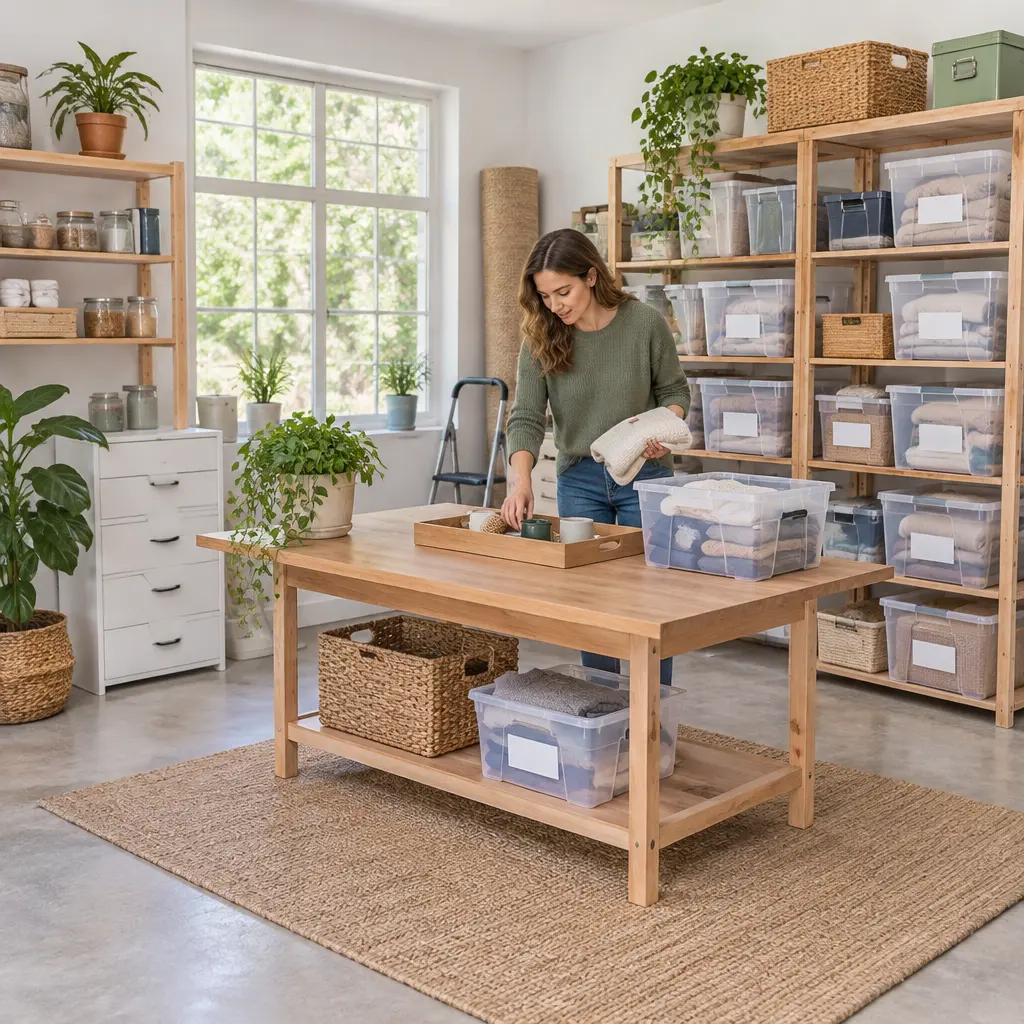
Home storage strategies work best when container type matches how often an item is retrieved: keep daily-use belongings visible and reachable, place occasional-use items in labeled, stackable containers, and reserve less accessible storage for seasonal or rarely used possessions. The U.S. Environmental Protection Agency reports that Americans generated 292.4 million tons of municipal solid waste in 2018, underscoring the value of managing household goods thoughtfully rather than letting them become difficult-to-find clutter. This guide explains retrieval-frequency planning, compares open, drawer, and enclosed containers, and offers practical ways to apply the system safely and efficiently.
Retrieval Frequency Defines a Home Storage Strategy
Retrieval frequency is how often a stored item is taken out for use. In home organization, it is a practical planning measure rather than a standardized scientific classification. The National Association of Productivity and Organizing Professionals (NAPO) advises organizing belongings around the way people use them and placing frequently used items where they are easy to access. Applying that principle means assigning containers and locations according to use, visibility, access effort, and protection needs.
A useful household scheme has three categories: daily or weekly, occasional, and seasonal or rare. The exact cutoffs should reflect the household’s routines. A cooking utensil used every morning may belong on a counter or in a top drawer, while holiday decorations may be stored in a labeled bin in a closet or attic. These categories connect retrieval frequency to container types: open storage supports immediate access, drawers and cabinets balance access with concealment, and lidded or protective containers suit longer-term storage.
Daily and Weekly Items: Visible, Open, and Reachable
High-frequency items are belongings used every day or most weeks, such as keys, charging cables, cooking tools, toiletries, or children’s school supplies. Use an open tray, countertop caddy, drawer organizer, or accessible shelf so the item can be returned to the same place without extra steps. In a kitchen, the National Kitchen & Bath Association’s planning guidance favors locating work zones and storage in relation to task flow; the same principle applies at home more broadly: store an object close to where it is used.
Open storage is convenient, but it can look cluttered and expose belongings to dust or spills. Keep the visible category small, group like items, and avoid placing frequently handled objects in high or awkward locations. For small essentials, shallow trays or divided inserts prevent items from disappearing into a larger container.
Occasional Items: Drawers, Bins, and Clear Labels
Occasional-use items are needed now and then, such as spare batteries, craft supplies, minor repair tools, or guest linens. Drawers, cabinet baskets, and medium-sized bins provide a useful balance between order and access. Transparent containers help users identify contents at a glance; opaque containers can work equally well when they have clear, consistent labels.
Group items by task rather than by container alone: a “sewing repairs” bin is more useful than a box labeled “miscellaneous.” The U.S. Consumer Product Safety Commission recommends keeping hazardous products in their original containers and following label directions. This is especially important for medicines, cleaning products, and chemicals: do not transfer them into food or drink containers, and store them securely away from children and pets.
Seasonal and Rarely Used Items: Lidded, Protective Containers
Low-frequency items include holiday decorations, camping equipment, spare bedding, and keepsakes. Lidded, durable containers can protect contents from dust and handling, while uniform shapes make storage easier to stack. Put the least frequently used items in the least accessible locations, but keep labels facing outward and maintain a simple inventory for containers stored in closets, basements, or garages.
Protection must suit the contents. The U.S. National Archives advises storing important records in cool, dry, stable conditions and avoiding damp spaces. Paper, photographs, textiles, and electronics can be damaged by moisture or temperature extremes, so a basement, attic, or garage may be unsuitable even when it offers convenient space. Use appropriate archival materials for valuable documents and avoid sealing damp items in airtight containers.
Container Types Match Different Access Needs
A container is any item or built-in feature that holds and organizes belongings, including trays, baskets, drawers, cabinets, boxes, and shelving. The right choice depends on the interaction between retrieval frequency and the item’s vulnerability to dust, moisture, light, or impact. Choosing a container only because it is attractive or stackable can create extra work if it hides everyday necessities or fails to protect stored belongings.
Open Containers for Fast Retrieval
Open baskets, trays, hooks, and shelves make contents easy to see and reach. They suit frequently used items and categories that benefit from quick visual checks, such as incoming mail or daily accessories. Their limitation is reduced protection and a greater chance of visual clutter, so use them selectively and define what belongs in each one.
Drawers and Cabinets for Protected, Frequent Access
Drawers and cabinets conceal belongings while keeping them within convenient reach. They work well for clothing, kitchen tools, toiletries, and other items used regularly but not necessarily displayed. Dividers, small bins, and labels reduce the effort of finding things. Store the most frequently used items in the easiest-to-reach sections, and avoid filling drawers so tightly that returning items becomes difficult.
Lidded Boxes for Long-Term or Infrequent Storage
Lidded boxes help contain dust and keep similar items together, making them suitable for seasonal or rarely used belongings. Clear boxes offer quick visual identification, while opaque boxes can shield light-sensitive contents. Label at least two sides, include a broad category and any important handling note, and avoid stacking containers so high that retrieving one requires moving an unstable pile.
Specialty Containers for Fragile, Hazardous, or Valuable Items
Some belongings need a container selected primarily for safety or preservation, not convenience. Use padding and sturdy boxes for fragile objects; follow manufacturer instructions for batteries and electronics; and keep medicines and household chemicals in their original packaging. The U.S. Food and Drug Administration advises storing medicines according to their labels, since heat, moisture, and other unsuitable conditions can affect them. Secure hazardous items away from children and pets, even if they are used often.
A Retrieval-Based System Improves Everyday Use
A practical system combines frequency, location, and container choice rather than treating them as separate decisions. For example, a family entryway might use hooks and a small tray for daily keys, a labeled drawer for occasional travel accessories, and a lidded closet bin for out-of-season gloves. In a kitchen, everyday utensils can stay in a countertop crock or top drawer, while specialty appliances used only a few times a year can be stored on a higher shelf.
Build a Simple Access Map
Start by identifying where each category is used and how often it is needed. Place high-frequency belongings between easy-to-reach heights, occasional items in nearby cabinets or drawers, and rare-use items in suitable secondary storage. This reduces unnecessary searching and repeated handling. In shared homes, labels should use plain language that everyone understands.
Review the System and Reduce Unused Storage
Storage needs change as households, hobbies, and seasons change. Review containers periodically: remove items no longer needed, update labels, and move belongings if their use frequency has changed. The EPA’s waste-management hierarchy places source reduction and reuse ahead of disposal, so reassessing possessions can help households avoid buying unnecessary organizers and make better use of what they already own.
Use a Comparison Chart to Choose Containers
The following text chart summarizes the relationship between access frequency and container choice:
- Daily or weekly: open tray, hook, countertop caddy, or easy-access drawer.
- Occasional: labeled drawer, cabinet basket, or medium bin near the point of use.
- Seasonal or rare: lidded, labeled, stackable container in suitable secondary storage.
- Fragile, hazardous, or valuable: purpose-appropriate protective storage, regardless of frequency.
Conclusion: Make Access the Basis of Home Storage
Retrieval frequency provides a simple foundation for matching home storage strategies to container types. Keep daily necessities visible and reachable, use drawers and labeled bins for occasional belongings, and choose protective, clearly marked containers for seasonal or rarely used items. Then adjust the system for safety, environmental conditions, and the needs of everyone in the household. Start by organizing one high-use area, observe what is difficult to retrieve, and revise container placement before purchasing more storage products.
Sources: U.S. Environmental Protection Agency, National Overview: Facts and Figures on Materials, Wastes and Recycling, https://www.epa.gov/facts-and-figures-about-materials-waste-and-recycling/national-overview-facts-and-figures-materials; National Association of Productivity and Organizing Professionals, Get Organized, https://www.napo.net/page/getorganized; National Kitchen & Bath Association, Kitchen Planning Guidelines, https://nkba.org/knowledge/kitchen-planning-guidelines/; U.S. Consumer Product Safety Commission, Household Chemicals, https://www.cpsc.gov/Safety-Education/Safety-Guides/Home/Household-Chemicals; U.S. National Archives, How to Preserve Family Archives, https://www.archives.gov/preservation/family-archives; U.S. Food and Drug Administration, Where and How to Store Medicines, https://www.fda.gov/consumers/consumer-updates/where-and-how-store-medicines; U.S. Environmental Protection Agency, Sustainable Materials Management: Non-Hazardous Materials and Waste Management Hierarchy, https://www.epa.gov/smm/sustainable-materials-management-non-hazardous-materials-and-waste-management-hierarchy