
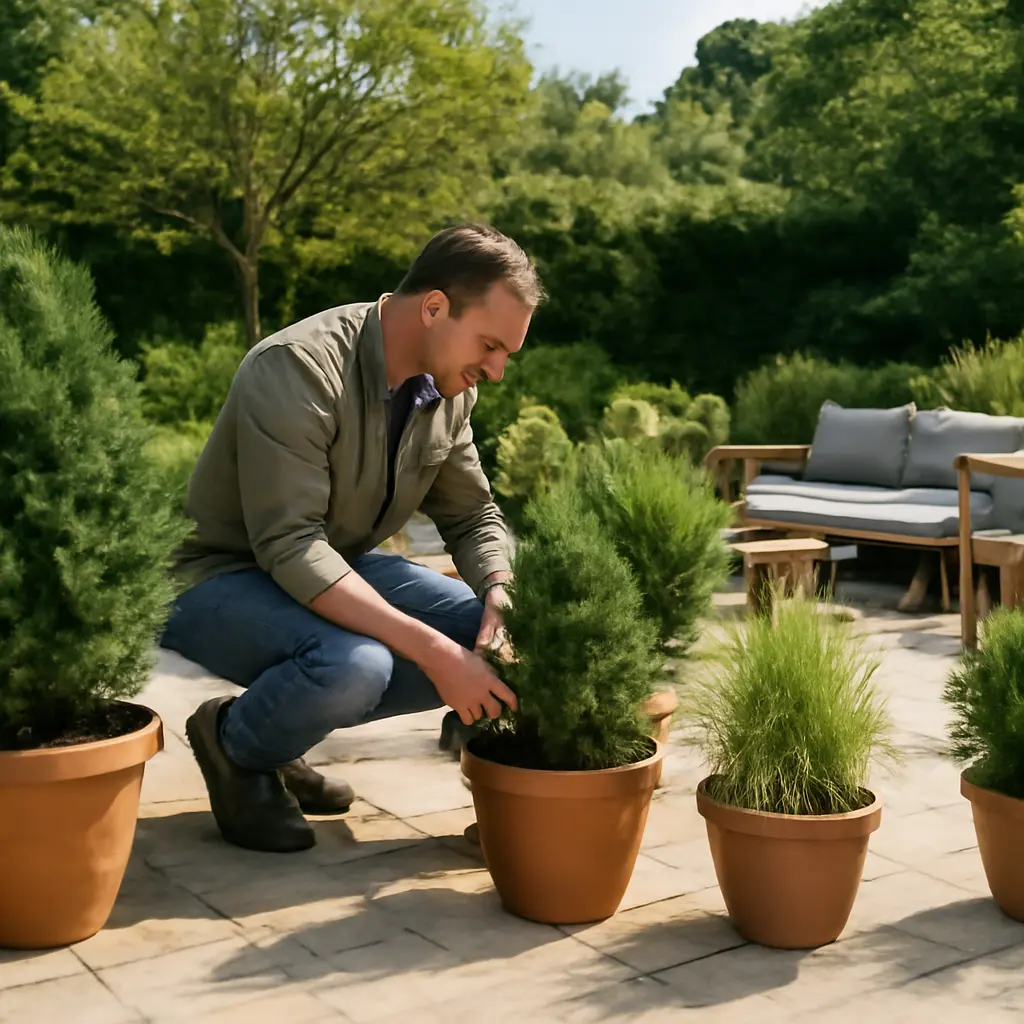
Designers’ quiet patio favorites are often not rare plants but dependable greenery in pots: plants chosen for their shape, climate fit, and ability to look good with manageable care. There is no reliable survey ranking what designers personally grow, but horticultural guidance supports the qualities behind these choices: matching plants to light and climate, choosing containers with drainage, and grouping species with similar water needs. Those principles help explain why evergreen structure, ornamental grasses, herbs, and compact shrubs recur in polished patio designs—and how to choose them for your own space.
Why designers choose greenery pots for patios
A greenery pot is a container planting selected chiefly for foliage, form, texture, or year-round structure rather than for a brief flush of flowers. The term is descriptive, not a formal botanical category. In practice, it can include a clipped evergreen, a fine-textured grass, a leafy herb, or a small shrub that suits the site and its container.
The University of Minnesota Extension advises gardeners to consider a plant’s light, mature size, and hardiness when choosing what to grow. Those considerations matter especially in containers: roots have less soil volume and are more exposed to temperature and moisture swings than roots in the ground. A beautiful plant can struggle if the patio’s conditions do not suit it.
Designers also use foliage to make a patio feel composed between flowering seasons. Evergreen leaves hold the scene together; grasses introduce movement; herbs add scent and practical use. A useful way to plan is to think in layers—one structural plant, one softer or trailing companion, and a restrained color palette—then adapt the combination to local conditions.
How greenery pots create patio structure
Patio structure is the arrangement of height, shape, and visual weight that makes an outdoor space feel intentional. In container planting, the pot itself is part of that structure: a tall, narrow vessel emphasizes vertical lines, while a broad, low bowl gives a planting a grounded profile. The Royal Horticultural Society’s container-gardening guidance similarly emphasizes choosing plants and containers in relation to the display’s scale and setting.
Evergreen shrubs for a lasting anchor
An evergreen shrub is a woody plant that retains foliage through the year, although leaf retention and hardiness vary by species and climate. Compact forms of boxwood, dwarf conifers, and other locally suitable evergreens can anchor a seating area or doorway with a steady outline. Their strong shapes are useful when flowers fade, and they can be repeated in matching pots to make a small patio feel orderly.
Before buying, check the plant’s mature dimensions and local winter hardiness rather than relying on its nursery-pot size. Container roots are less insulated than roots in garden soil, so a shrub that survives outdoors in the ground may need extra protection in a pot. Avoid treating any one evergreen as universally reliable: heat, wind, reflected sunlight, and regional pests all affect performance.
Ornamental grasses for movement and texture
Ornamental grasses are grown for their linear leaves, clumping forms, and often their seed heads. They bring movement and a softer edge beside stone, metal, or smooth-sided pots. Depending on the species, grasses may prefer sun or partial shade, and some are deciduous while others remain evergreen or semi-evergreen.
Choose a clumping, appropriately sized variety for a container, and confirm its mature height and spread. A grass that is too large can quickly overwhelm a small patio; one that is poorly matched to the light may become thin or floppy. In a mixed pot, use grasses as the upright or flowing element and pair them only with plants that share similar light and watering needs.
How greenery pots balance beauty and everyday use
Once the main forms are in place, designers often add plants that contribute fragrance, edible leaves, or a relaxed, layered look. This is where the distinction between a purely decorative display and a useful patio planting becomes less important: a well-chosen plant can do both.
Herbs for fragrance and practical greenery
Herbs are plants grown for culinary, aromatic, or medicinal uses; many also have attractive foliage that works in containers. Rosemary, thyme, sage, and mint are familiar examples, but their needs differ. Mediterranean herbs such as rosemary and thyme generally prefer strong light and well-drained soil, while mint tends to spread and is often easiest to manage in its own pot.
The University of Maryland Extension recommends matching herbs to their growing conditions and notes that many common culinary herbs need sun and good drainage. A sunny patio can therefore suit a compact herb collection, but a shaded balcony may call for different plants. Harvest lightly and regularly, and do not assume that all herbs should receive the same watering schedule.
Trailing plants for softer edges
Trailing plants grow over the rim of a container, softening its outline and visually linking the pot to nearby surfaces. Depending on climate and light, options may include creeping thyme, trailing rosemary, or suitable annual foliage plants. Their role is not merely decorative: a trailing form can balance a tall centerpiece and make a container arrangement feel fuller.
Use trailing plants selectively so they do not conceal the container’s shape or crowd neighboring pots. Check whether a species is safe for pets if animals can reach the patio, and confirm that it will tolerate the site’s exposure. A plant that trails attractively in a sunny, sheltered spot may perform poorly in deep shade or strong drying wind.
How to keep greenery pots healthy
Plant selection establishes the design, but container care determines whether it lasts. The University of Illinois Extension explains that container plants depend on regular attention to watering and drainage because their limited soil volume can dry out faster than garden beds. The exact schedule varies with pot size, weather, plant type, and exposure, so checking the soil is more reliable than watering by calendar alone.
Choose drainage and an appropriate potting mix
Drainage is the movement of excess water out of a container. Select pots with drainage holes and use a potting mix designed for containers rather than dense garden soil, which can compact and restrict air and water movement. If a decorative outer pot has no holes, keep the plant in a draining nursery pot and remove it when watering so excess water can escape.
Pot size matters, too. A container that is too small can dry quickly and restrict root growth, while an excessively large volume of wet mix can be difficult for a small root system to use efficiently. Choose a pot that provides room for growth without making the display unwieldy, and make sure it is stable enough for the plant’s height and the patio’s wind exposure.
Group plants by light, water, and climate needs
A successful grouping combines plants that can thrive in the same conditions. Pairing a drought-tolerant herb with a moisture-loving foliage plant may look appealing at first, but it makes watering difficult. Instead, group by exposure and water preference, then vary height and texture within each compatible set.
For a simple design, use one upright evergreen or grass as the anchor, add a medium-height leafy plant, and finish with a low or trailing species. Repeat one foliage color or pot material to connect separate arrangements. This approach gives the patio visual continuity without requiring every container to contain the same plants.
A practical designer-inspired patio plan
Consider a small, sunny seating area in a temperate climate. A compact, locally hardy evergreen in a substantial pot can frame the entrance; a clumping ornamental grass can add movement beside a chair; and a separate container of thyme or rosemary can provide fragrant, useful foliage. In a shadier patio, the same design logic still applies, but the plant choices should change to species suited to lower light.
This example is a design framework, not a universal plant recipe. Confirm each plant’s mature size, hardiness, light preference, water needs, and pet safety with a regional extension service or reputable nursery. The best greenery pots are not necessarily the most expensive or unusual: they are the ones whose plants fit the space and remain manageable through the seasons.
Conclusion: choose greenery pots for the conditions you have
Evergreen shrubs give greenery pots lasting structure, ornamental grasses add texture and movement, and herbs or trailing plants bring fragrance and softness. Their success depends on the same practical principles: match plants to light and climate, provide drainage, use suitable container mix, and group companions with similar needs. Start by observing your patio’s sun and wind, then choose a small number of plants that suit those conditions. For further guidance, consult your local cooperative extension or botanical garden before buying.
Sources: University of Minnesota Extension, Selecting landscape plants, https://extension.umn.edu/planting-and-growing-guides/planting-and-transplanting-trees-and-shrubs; Royal Horticultural Society, Container gardening, https://www.rhs.org.uk/container-gardening; University of Maryland Extension, Growing herbs in a home garden, https://extension.umd.edu/resource/growing-herbs-home-garden; University of Illinois Extension, Container gardening, https://extension.illinois.edu/container-gardening.