
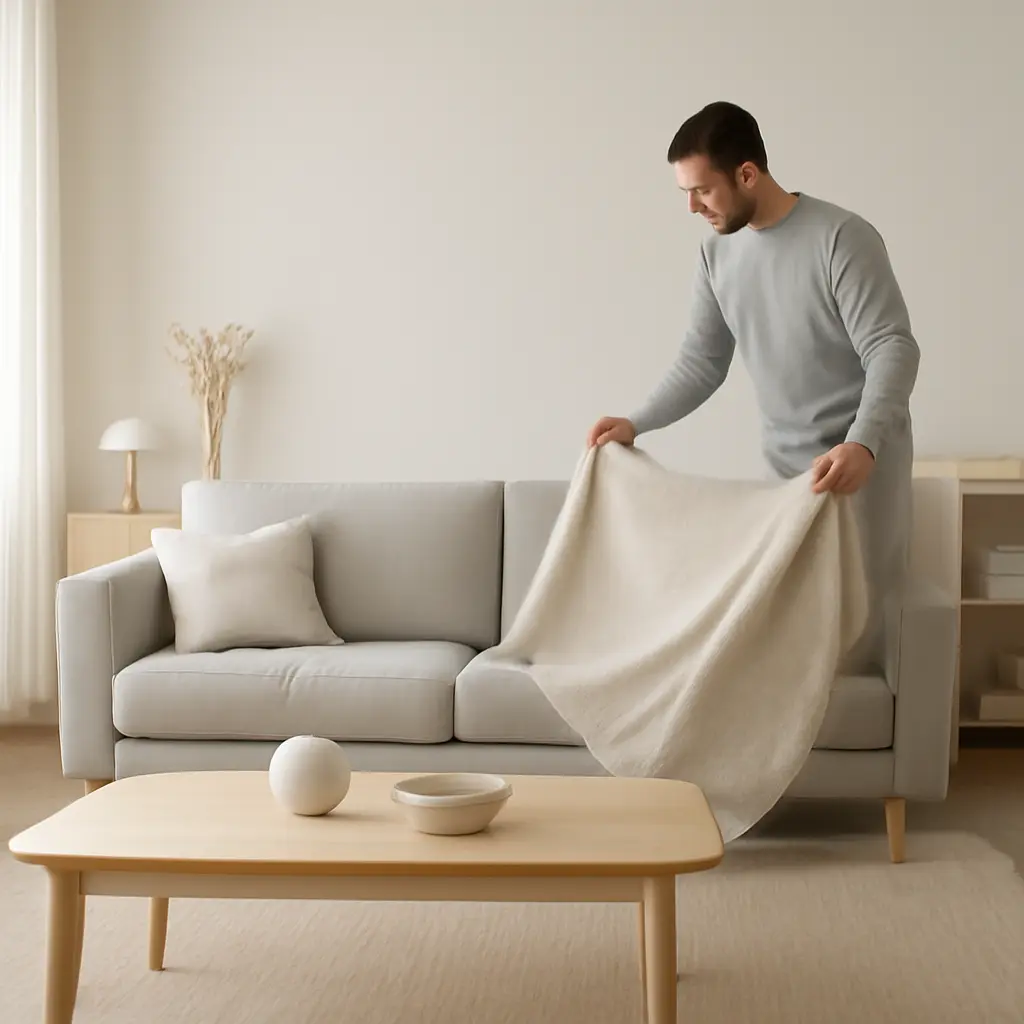
Scandinavian living rooms and modern minimalist rooms share clean lines and an uncluttered feel, but they solve different problems: Scandinavian design prioritizes warmth, comfort, and practical everyday use, while modern minimalism emphasizes visual restraint and keeping only what serves a clear purpose. For most homes, Scandinavian design is the more forgiving choice; a minimalist approach can win when simplicity, limited visual distraction, or a compact footprint matters most. The distinction is not merely aesthetic: the U.S. Environmental Protection Agency estimates that Americans generated 292.4 million tons of municipal solid waste in 2018, a reminder that durable, intentional furnishing choices matter alongside appearance.
Scandinavian living rooms balance simplicity with warmth
Scandinavian living-room design is an interior-design approach rooted in Nordic traditions and shaped by functional furniture, natural materials, restrained colors, daylight, and comfort. There is no single official definition, but the Nordic Design tradition is commonly associated with democratic design: useful, well-made objects intended to work for everyday life rather than serve only as decoration. The style’s familiar elements include pale timber, wool or linen textiles, simple silhouettes, and carefully chosen accents.
Its related expressions include Danish modern, Swedish Gustavian influences, and contemporary Nordic design. These are not interchangeable historical styles, but they share an emphasis on practical beauty and a close relationship between objects, materials, and daily routines. In a living room, that can mean a streamlined sofa softened by a wool throw, a wooden coffee table, and warm task lighting.
Hygge makes comfort part of the design brief
Hygge is a Danish cultural idea associated with coziness, conviviality, and well-being—not a rigid decorating formula. Applied to a living room, it can mean layered lighting, tactile fabrics, comfortable seating, and a welcoming arrangement for conversation. The Danish Ministry of Foreign Affairs describes hygge as an everyday cultural concept centered on enjoying simple pleasures and a relaxed atmosphere.
This emphasis makes Scandinavian rooms especially adaptable for households that use the living room for several purposes. A reading lamp, washable rug, closed storage, and a soft throw can add comfort without abandoning clean lines. The practical test is whether the room feels inviting in use, not simply whether it looks sparse in a photograph.
Daylight and natural materials shape the Nordic palette
Nordic interiors often use light colors and reflective surfaces to make the most of available daylight, with wood, stone, wool, and linen adding texture. This is a design convention rather than a guarantee that pale rooms are inherently brighter: window orientation, glazing, nearby buildings, and artificial lighting all affect actual light levels. The U.S. Department of Energy notes that daylighting strategies depend on a building’s climate, orientation, and window design.
A practical version of the look pairs a pale wall with a mid-tone wood floor and one or two darker accents. Natural materials bring variation that prevents a restrained palette from feeling flat, while rugs and curtains can help soften a room acoustically and visually.
Modern minimalism reduces visual and material excess
Modern minimalism is an approach to interiors that limits visual clutter and emphasizes essential forms, purposeful objects, and clear space. It is not synonymous with an empty room or a specific color scheme. The Museum of Modern Art’s collection and writing on modern design show how modernism has encompassed varied materials and forms; minimalism, more specifically, is associated with reducing a composition to a small number of deliberate elements.
Common subtypes include warm minimalism, which uses natural textures and softer tones, and stark or monochromatic minimalism, which relies on strong contrast and highly controlled detailing. Both can be useful, but they differ in how much softness and decoration they allow. In either case, storage, furniture scale, and visual order carry more weight because there are fewer decorative elements to distract from them.
Furniture and storage determine whether minimalism works
A minimalist room depends on furniture that earns its place. A well-scaled sofa, a compact side table, and concealed storage may be more effective than many small pieces. The approach can make a small living room feel less crowded, but only if everyday items have a practical home; otherwise, clutter remains visible and the intended calm is difficult to maintain.
The Environmental Protection Agency reports that furniture and furnishings made up 12.1 million tons of U.S. municipal solid waste in 2018. That figure does not prove minimalism reduces waste by itself, but it underscores the value of buying fewer, durable pieces and repairing or reusing furniture where possible.
Minimalism can support calm, but comfort still needs planning
A restrained room can reduce competing visual stimuli and make architectural features more noticeable. Yet calm does not require hard surfaces, bare walls, or uncomfortable seating. Adding a textured rug, indirect lighting, or a single artwork can preserve simplicity while making the room more livable.
This is where warm minimalism overlaps with Scandinavian design. Both can use natural materials, neutral colors, and functional objects; the main difference is emphasis. Scandinavian rooms generally foreground coziness and hospitality, while minimalism gives greater priority to reduction and visual discipline.
Scandinavian design or modern minimalism: which approach wins?
Neither approach wins for every home. Scandinavian design is usually the stronger all-round choice for a busy shared living room because it combines practical simplicity with softness and flexibility. Modern minimalism is a better fit for people who value a highly ordered environment, have effective storage, and prefer fewer visible objects. A hybrid often works best: minimalist furniture and storage, paired with Scandinavian textiles, warm lighting, and natural finishes.
Choose Scandinavian design for shared, lived-in spaces
Choose a Scandinavian direction if the room needs to welcome guests, support relaxation, or accommodate different ages and activities. Begin with a comfortable, durable sofa; add layered lighting and a rug; then use a limited palette of wood, soft neutrals, and one or two accent colors. The result can remain uncluttered without feeling strict.
Choose minimalism for controlled, low-clutter rooms
Choose modern minimalism if you prefer clear surfaces and have a realistic plan for storing books, electronics, toys, and daily essentials. Measure furniture before buying, prioritize pieces with lasting utility, and avoid treating “less” as a reason to discard usable belongings. Reuse, secondhand purchases, and repair can align a pared-back room with more responsible consumption.
Use a simple decision test before furnishing
Before choosing a style, list the room’s main activities, the storage it needs, and the amount of maintenance you can realistically manage. If comfort and flexibility top the list, lean Scandinavian. If visual order and a small number of objects matter most, lean minimalist. If both matter, use a restrained foundation and add warmth through materials rather than extra decoration.
Conclusion: choose the room you can comfortably live in
Scandinavian living rooms put functional beauty, natural materials, and hygge-inspired comfort at the center; modern minimalist rooms put reduction, purposeful objects, and visual order first. The best choice depends on how the room is used, how much storage is available, and what feels welcoming to its occupants. For many households, a Scandinavian-minimalist blend offers the strongest balance: fewer, well-chosen pieces, softened with texture and warm light. Before buying, measure the room, assess what you already own, and consider durable or secondhand options.
Sources: U.S. Environmental Protection Agency, Advancing Sustainable Materials Management: 2018 Fact Sheet, https://www.epa.gov/sites/default/files/2021-01/documents/2018_ff_fact_sheet_dec_2020_fnl_508.pdf; Danish Ministry of Foreign Affairs, Hygge, https://denmark.dk/people-and-culture/hygge; U.S. Department of Energy, Daylighting, https://www.energy.gov/energysaver/daylighting; The Museum of Modern Art, Modern Design, https://www.moma.org/collection/terms/modernism